
How to Function the Day After Getting Devastating News

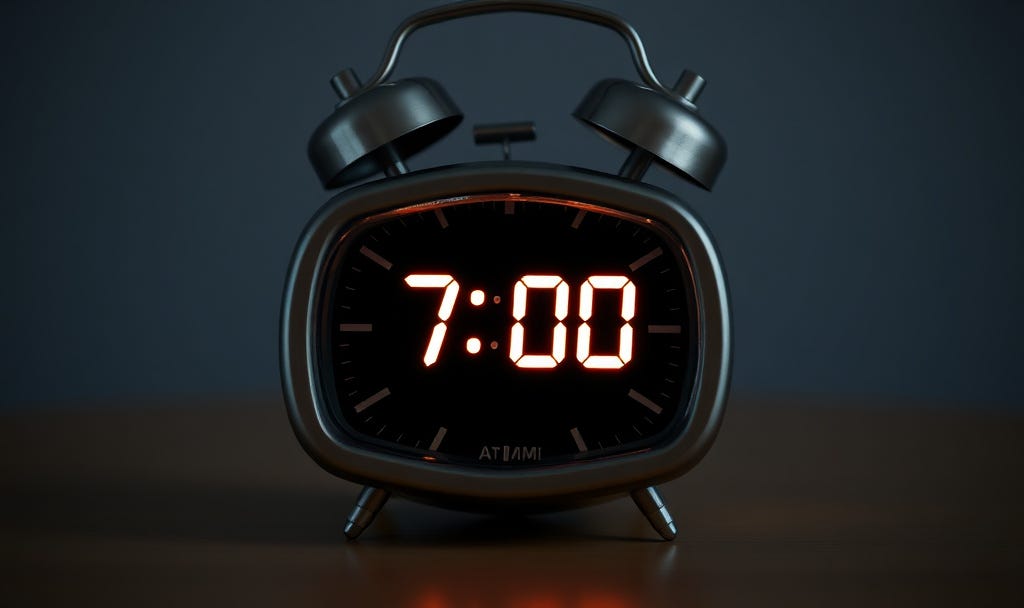
The morning after my diagnosis, my alarm went off at 7am. For a moment, maybe three seconds, I didn’t remember. Then it hit me like a physical blow: I have cancer.
And the world was shut down. It was 2020. A pandemic. Hospitals were overwhelmed. I couldn’t see my family. I couldn’t hug my friends. I was going to have to fight cancer during a global crisis.
My husband was still asleep next to me. In a few minutes, he’d wake up and we’d have to figure out what “normal” looked like now.
I couldn’t move.
How was I supposed to make breakfast when I might be dying?
How was I supposed to care about work emails when my entire world had just collapsed? So I got up.
When Life Doesn’t Pause for Devastation
Nobody tells you this about getting devastating news,Your life doesn’t stop.
The bills still need to be paid. Work emails still need responses. The house still needs basic maintenance. You still needs clean clothes and food and some version of you that’s not completely falling apart.
The world doesn’t pause while you process the fact that everything just changed. You still have to function.
And you have absolutely no idea how.
What I Tried First (That Made Everything Worse)
That first morning, I tried to be normal.
I made coffee. I checked my emails. I put on real clothes instead of staying in pajamas I was, after all, going to see my surgeon). I was going to prove I could handle this. I was going to show my myself that nothing had changed. By 10 a.m though, I was sitting on the bathroom floor, sobbing so hard I couldn’t breathe.
I’d used every ounce of energy I had just pretending to be okay for two hours. And I still had an entire day ahead of me.
More doctors’ appointments to schedule. Treatment plans to research. Family members to call (through a screen, because it was 2020 and we couldn’t see anyone in person).
The performance of normalcy had completely depleted me. And I realized: I can’t do this. Not like this. Not for months. This isn’t right.
The Question That Changed Everything
That afternoon, my husband and I were talking when he asked, “How are you doing?” And instead of saying “I’m fine” like I’d planned, I told him, “I don’t know how to function right now. I don’t know how to make dinner and schedule appointments and… when I just found out I have cancer. During a pandemic. When I can’t see anyone or go anywhere or even pretend life is normal.”
He was quiet for a moment. Then he said something I’ve never forgotten, “You’re not required to fix anything today. Today, you’re just trying to do the next right thing.” Not the next ten things. Not the entire day. Not the whole week. Just the next right thing.
The Morning Minimum
The next morning, I didn’t try to be normal.
I didn’t make a full breakfast. I didn’t check emails. I didn’t call anybody.
Instead, I asked myself, “What’s the absolute minimum I need to do to get through the next hour?” The answer was: Get out of bed. Brush my teeth. Put on clothes. That was it. That was the morning minimum.
I got out of bed. I brushed my teeth. I put on sweatpants and a sweatshirt.
Then I asked again, “What’s the next right thing?” Make coffee. Sit on the couch with my husband. Just sit.
Then, “What’s the next right thing?” Eat something. Toast. That’s all. Well, maybe some eggs too.
Then, “What’s the next right thing?” Look at my calendar. See what’s actually urgent. I didn’t try to tackle the entire day. I didn’t try to maintain the illusion of normalcy. I didn’t push myself to “be strong.” I just did the next right thing. And then the next. And then the next. By the end of that day, I’d gotten through it. And that was enough.
[This became Sunday Reset Practice #4: The Morning Minimum. It’s a simple protocol for when getting out of bed feels impossible. Paid subscribers get the complete Sunday Reset Protocol with all 6 practices.]
What “Functioning” Actually Means During Crisis
Before my diagnosis, functioning meant:
Being productive at work
Maintaining a clean house
Cooking healthy meals
Being present and engaged with my husband
Managing my schedule efficiently
Staying connected with family and friends
After diagnosis (during a pandemic), functioning meant:
Getting out of bed
Eating something (anything)
Showering (eventually, some days I skipped it)
Showing up for critical appointments
Not completely falling apart every single moment
Those are two completely different definitions. And it took me weeks to accept that the second definition was okay. That I wasn’t failing by ‘lowering my standards’. I was surviving by being realistic about my capacity.
The Next Right Thing Protocol
Here’s what that looked like in practice:
Morning: What’s the next right thing? Get out of bed. Did it.
What’s the next right thing? Bathroom. Brush teeth. Did it.
What’s the next right thing? Get dressed. Did it.
By 8am: What’s the next right thing? Coffee. Something to eat. Toast. That’s enough.
What’s the next right thing? Check calendar. What’s actually urgent today? Did it.
By 9am: What’s the next right thing? Sit down. Breathe. Assess.
Some days, the next right thing after that was: call the doctor.
Other days, the next right thing was: lie on the couch for an hour and stare at nothing or fall asleep.
Both were valid. Both were ‘functioning’.
The Things I Stopped Doing (And Why It Was Okay)
During those first weeks, I stopped doing a lot of things:
I stopped cooking elaborate meals. We ate a lot of scrambled eggs, rotisserie chicken, and soup. We were fed. That was enough.
I stopped responding to non-urgent calls and emails. If it wasn’t life-or-death, it could wait. Or not get answered at all.
I stopped cleaning the house until it was spotless. We lived in controlled chaos. If someone didn’t like it, they weren’t coming over anyway, it was 2020.
I stopped pretending I was okay. When someone asked how I was doing, I told them the truth, “I’m struggling today” or “I’m having a good day today.” No more performance.
I stopped planning more than one day ahead. The future was too overwhelming. I could only handle TODAY.
I made it a point to remember, ‘Functioning’ doesn’t mean maintaining your pre-crisis life. It means doing what’s necessary to survive right NOW.
The Pandemic Layer Made It Worse
Here’s what made 2020 particularly brutal, I couldn’t see my family in person. I couldn’t hug my friends. I couldn’t go sit in a coffee shop. I couldn’t distract myself by going anywhere. ‘Functioning’ during crisis meant functioning during TWO crises: cancer AND a pandemic. Some days, I didn’t know which one I was more afraid of.
What I Wish Someone Had Told Me
That if you just got devastating news and you’re staring at the ceiling wondering how you’re going to get through the day, You don’t have to think about getting through the entire day all at once. You just have to do the NEXT right thing.
Get out of bed. That’s one thing.
Brush your teeth. That’s another.
Put on clothes. That’s three.
See? You’re already ‘functioning.’
The Morning Minimum (Step by Step)
Here’s what I did every morning during those first weeks:
Before getting out of bed, I asked myself: What’s the absolute minimum I need to do to get through the next two hours?
Usually, the answer was:
Get vertical
Bathroom
Clothes (sometimes just different sweatpants)
Something to eat or drink
That was it. Four things.
Some mornings, even that felt like too much. On those mornings, I’d break it down further:
Sit up in bed
Put feet on floor
Stand up
Walk to bathroom
Ridiculous? Maybe.
But it worked.
Because when you’re in shock, when your nervous system is completely overwhelmed, you can’t process “Get through the entire day.” You can only process: “Do this one small thing right now.”
Functioning Is Not the Same as Fixing
I had to learn that, You’re not trying to solve anything today.
You’re not trying to:
Figure out the entire treatment plan
Process all your emotions
Make everyone around you feel better
Maintain your pre-crisis productivity
“Stay strong” or “be positive”
Navigate a pandemic AND cancer simultaneously
You’re just trying to:
Get through the next hour (the next 5 minutes, even)
Do what’s immediately necessary
Keep your body alive and somewhat functional
That’s it. You’re trying to live.
When You Can’t Do Even the Minimum
Some mornings, I couldn’t do the morning minimum. I’d lie in bed and think, '“I can’t. I can’t get up. I can’t do this.” On those mornings, I’d adjust the minimum: What’s the next right thing? Stay in bed. Breathe. That’s enough for right now. And I’d give myself permission to do nothing for thirty minutes.
Then I’d ask again, “What’s the next right thing now?” Sometimes the answer was still: Nothing. Stay here. Rest. And that was okay.
‘Functioning,’ sometimes, means recognizing when you need to stop trying to function.
The Permission You Need
You don’t have to maintain your pre-crisis life (not now, not after).
You don’t have to be productive.
You don’t have to cook complicated meals or answer all your emails or keep your house clean or be okay all the time.
You just have to do the next right thing.
And if the next right thing is “stay in bed for thirty more minutes,” that counts.
If the next right thing is “cry in the shower for ten minutes,” that counts.
If the next right thing is “call your husband from another room because you need him right now,” that counts.
You’re not failing. You’re functioning.
And functioning, during crisis, looks nothing like you thought it would.
What You Can Do Right Now
If you’re reading this because you just got devastating news and you don’t know how to get through today, ask yourself, “What’s the next right thing?” Not the next ten things. Just one.
Maybe it’s:
Getting out of bed
Drinking water
Texting someone who can help
Canceling something non-essential
Taking a shower
Eating something
Asking for help
Do that ONE thing.
Then ask again, “What’s the next right thing?” You don’t need a plan for the week. You don’t need to have it all figured out. You just need to do the next right thing (for YOU right NOW).
And then the next.
And then the next.
By the end of the day, you’ll have gotten through it.
And that’s what ‘functioning’ looks like right now.
P.S. What’s the next right thing for you today? Please tell me, sometimes just naming it makes it easier to do.
I send a new story + lesson every Tuesday. If you want the full toolkit - including Crisis Kitchen recipes, boundary scripts, and my Sunday Reset Tips - you can subscribe to the paid version for $15/month. But the stories? Those are free. Because we all need to know we’re not alone in the fire.
For paid subscribers: You have immediate access to 18 survival tools: Crisis Kitchen recipes, boundary scripts, and Sunday Reset Tips. Everything I wish I’d had when I was “in the fire.”